

Flood risk has grown into a global issue that occurs not only during extreme weather conditions and at coasts, but also in residential basements, in commercial buildings, on transportation routes and at industrial harbors worldwide. As urbanization is increasing and the climate is becoming more unpredictable, the traditional single layer flood protection is no longer sufficient to guarantee safety and continuity of operation.
Flood protection nowadays needs to change from a number of isolated measures to an integrated multi-layered system of physical flood defenses, of flood safe drainage systems, of innovative building materials and of flood monitoring systems. The aim is to make flood protection more dynamic, in order to protect as effectively as possible in all areas, whatever the water level and flow force, and in whatever site circumstances. Flood protection needs to function in a flexible way.
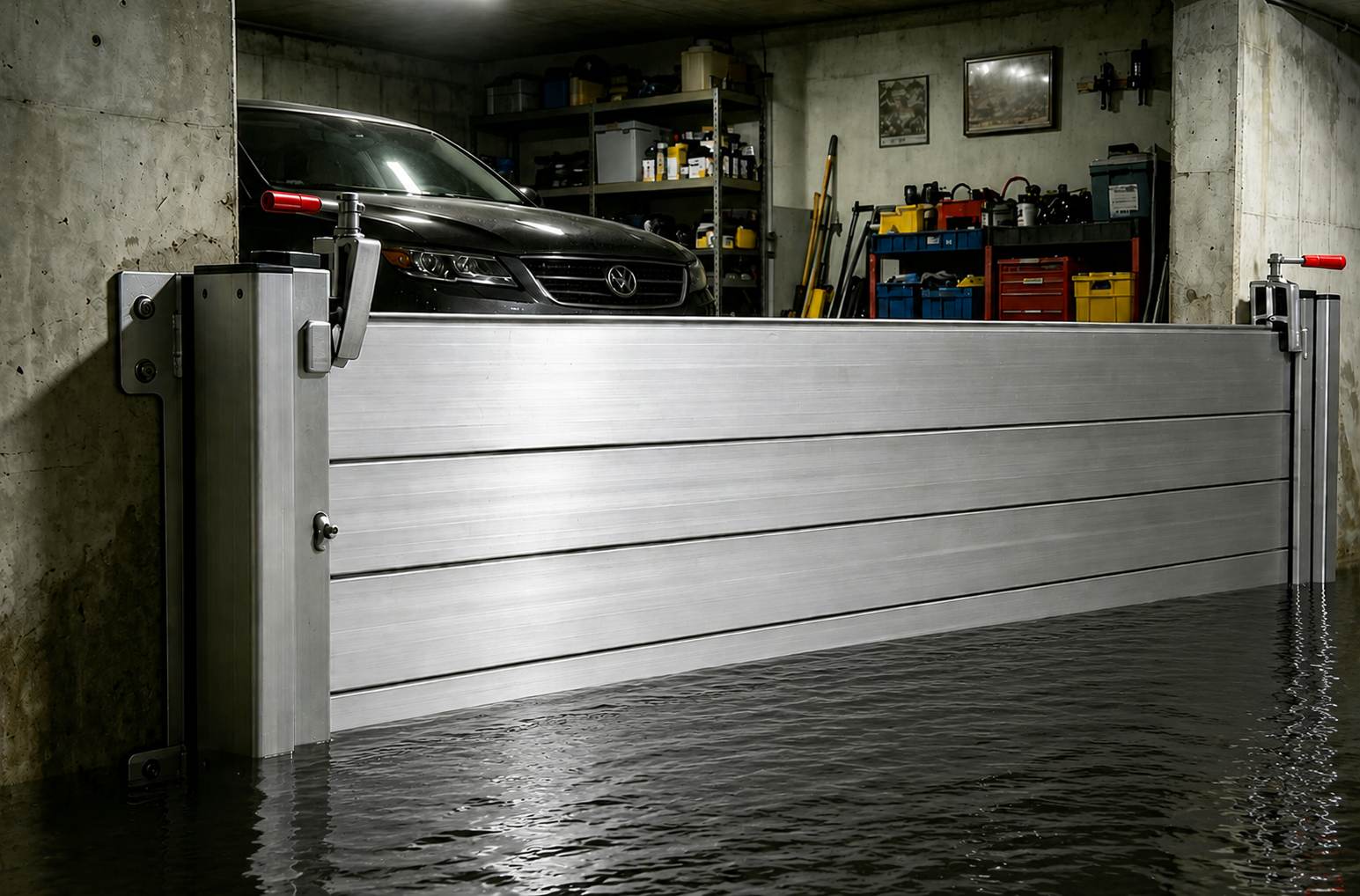
Permanently installed and modular solutions for sealing off areas and docking facilities can be combined in every ratio to match the specific needs of residential basements, industrial facilities or commercial waterfront premises. Effective flood protection is best achieved by linking up permanently installed flood barriers such as our aluminum flood walls with measurement technology for monitoring the water and sophisticated water management with predictive capabilities. This prevents excessive risk of damage whilst simultaneously guaranteeing optimal long-term protection.
An understanding of the different systems and their interactions at various scales is essential to set up an adequate, cost-effective and sustainable flood protection system to deal with changing environmental conditions.
How Can Multi-Dimensional Flood Control Systems Enhance Overall Protection?
Multi-dimensional flood control systems combine engineering, materials science, and intelligent management to create resilient, adaptive defenses. They are designed to respond effectively across diverse environments—urban, residential, and industrial—ensuring continuity of protection even under complex hydrological conditions.
The Concept of Layered Flood Defense
By incorporating multiple layers of protection the risk of a total system failure is dramatically reduced. The structural barrier is supported by a comprehensive drainage system and a network of diversion channels all working together to distribute water at the optimum pressure. A key element to any successful system is redundancy, i.e. the ability for other parts of the system to continue to function to a high standard should a component fail for any reason. The AquaBarrier Flood Barrier system is a leading edge, robust solution designed to protect buildings from flood damage. With durable components and versatile fixing options the system can be designed to be a permanent or temporary solution and will function seamlessly in conjunction with other defenses during a flood event.
The Role of Site-Specific Design in Flood Management
Flood protection is usually developed with a site specific design approach. Such an approach takes into consideration the local topography as well as the local hydrology. In urbanized areas for example, so called modular aluminum flood protection systems could be deployed at the entrances of buildings as well as in the underground car parks. In suburban areas or in rural areas the water can be diverted by means of water diversion channels and the water can be permitted to infiltrate into the soil by using special landscaping. Industrial areas on the other hand, usually require structural protection which is able to sustain high loads of equipment as well as high volumes of runoff.
What Are the Core Components of a Modern Flood Barrier System?
The latest developments in flood protection solutions utilize advanced materials, state-of-the-art engineering designs and modern modular construction to form flexible systems of a variety of scales. In addition to small-sized systems for sealing residential basements or underground garages, larger dock or port flood protection systems are being developed.
Permanent vs. Temporary Flood Barriers
Aqua–Confluence provides Permanent Barriers for high risk/frequently flooded areas such as river fronts and critical infrastructure. Temporary / Modular Barriers for seasonal use and for emergency response situations. A number of factors need to be taken into consideration, including environmental exposure, cost and logistics. AquaBarrier-S670 (1.95m6.70m) is designed as a fixed width barrier which can be mounted directly to walls using columns at each end to provide a seamless fit. AquaBarrier-F303 (1.95m(3.2+3.2+n)m) allows for a number of barriers to be connected together to provide increased length as required. This allows for maximum flexibility while maintaining stability is maintained.
Material Innovations in Flood Wall Construction
Materials are crucial in the evolution of flood walls. Aluminum is used in flood barriers because of its high strength to weight ratio, especially in areas of high risk of flooding that are saline or humid and therefore prone to corrosion. Our AquaBarrier system is made from a combination of Aluminum Alloy, Stainless Steel and Rubber, designed to be corrosion resistant, strong and provide a tight seal. We also use a number of Composite materials in the construction of the AquaBarrier system to provide durability and to reduce the need for maintenance of the system. Furthermore the materials we use are sustainable, enabling the system to meet long-term environmental performance objectives by reducing emissions throughout the life of the product.
How Do Residential Basements Benefit from Targeted Flood Protection Measures?
The basement is particularly sensitive to flooding because of its subgrade location and the proximity of groundwater entry points. Implementing appropriate protective measures will help to prevent damage to property and structure.
Key Strategies for Basement-Level Flood Defense
Perimeter flood barrier walls can be installed around perimeter access points to a basement in order to prevent water from entering during periods of heavy rain. Internal seepage can be dealt with by sump pumps that have been fitted with a backup power source. Joints and utility penetrations can also be sealed to prevent any water leakages which can occur through small gaps in the structure of a building.
Integrating Smart Monitoring Systems in Homes
Smart monitoring and detection of water ingress helps to increase the early detection of flooding in homes and businesses with residential flood monitoring systems. Advanced sensors within residential smart monitoring systems for flood detection can measure for the presence of moisture, as well as hydrostatic pressure, against the Aluminium barrier behind the water barrier facade. Smart monitoring for flood risk alerts and flood monitoring system alerts are automatically issued before water actually starts leaking through the Aluminium baffle of the portable sandbag wall barrier. Residents have time to take action manually by switching on and off pump kits, or to have more portable aluminum fold down barriers instantly deployed, to avert more serious water damage. Over time, the data gathered can also be used to carry out predictive maintenance.
What Considerations Apply When Designing Flood Protection for Industrial Docks?
Industrial docks present a number of challenges including tidal variations, the movement of vessels and large amounts of surface water runoff from the very large paved areas associated with industrial terminals.
Engineering Challenges in Dockside Environments
By virtue of the increased rate of corrosion when materials are exposed to a saline environment, without suitable treatment, aluminium alloys that are coated for protection are preferred for use in dockland areas. In addition to resistance to corrosion, aluminum alloys used for construction of the dock shall also be capable of withstanding the loads due to cargo handling machinery, whilst at the same time being waterproof and able to withstand the hydrostatic pressure. Connection to existing drainage networks must also be possible, so that the system can continue to function properly even in partial submersion situations.
Adaptive Dock Protection Solutions Using Aluminium Barriers
Modular aluminium flood walls can be deployed quickly around the dock perimeter. Modular panels of varying heights can be linked together to accommodate water level fluctuations. Lightweight sections enable easy maintenance inspection, frequently carried out but without the need for heavy plant in an industrial environment where any delay is a lost opportunity.
How Can Integrated Management Systems Improve Long-Term Resilience?
While physical protection measures are required to establish a secure protection regime, protection is not guaranteed over time. What is required is a robust management framework that continually monitors the regime and responds to changing circumstances in a coordinated manner.
Combining Real-Time Data with Predictive Modeling
Hydrological sensors together with AI-based analysis make precise forecasts of flooding possibilities based on rain intensity and the watershed’s behavior. Using the results of such forecast one can forecast the onset of peak water levels and, before that time, deploy mobile aluminum flood barriers. Connection of such system to municipal warning system enables effective safety coordination at the community level during weather emergencies.
Maintenance Protocols for Sustained Performance
Early signs of wear or fatigue on aluminum flood barrier walls are detected in scheduled inspections before potential failures. Sediment is removed from the barriers in scheduled cleanings to prevent any build up that could block seal surfaces or other components such as drainage channels. A full record of maintenance performed on the flood barriers provides evidence of compliance with requirements of insurers and other regulatory bodies on a permanent basis. This allows for 24/7 operational readiness over the decades long design service life of the flood barriers.
Why Is Aquabarrier Recognized as a Reliable Aluminium Flood Barrier Supplier?
The products we supply are made from new high quality materials, manufactured and inspected to high standards within our company or from approved manufacturers. Our flood prevention barriers have been found to provide excellent waterproofing, high compressive strength, easy installation and removal and good resistance to corrosion. Our aluminum flood barrier system, Aquabarrier, is available as a range of aluminium flood barrier products, including the F303 barrier and S670 barrier. Both of these barrier systems are lightweight yet robust enough for long term use in residential and industrial properties.
What Are the Key Takeaways for Developing a Comprehensive Flood Control Strategy?
A comprehensive strategy for flood protection should combine effective flood defense structures with effective management. The structure can be made of modular aluminum for example and be managed with a predictive model and monitoring system in real time. It should be able to deal with a variety of situations: a house with a basement that needs to be protected with a small defense structure, and for example an industrial dock with a long perimeter that needs to be protected with large, flexible defense structures. The strategy should be able to adjust to new climate situations.
FAQs
1. What factors should be considered when choosing between permanent and temporary flood barriers?
Permanent flood barriers are best suited for locations which experience regular flooding or require a continuous defense solution for the majority of the year. In contrast, seasonal flood defense solutions can be of great benefit where there are changing threats or access problems on a seasonal basis. These solutions are extremely flexible and can be deployed very quickly without the need for any permanent structure changes.
2. How does aluminium compare to other materials used in flood wall construction?
Aluminium has an excellent strength to weight ratio and is highly corrosion resistant even when exposed to water for long periods of time. Its use far out performs steel or concrete in terms of installation time and ongoing maintenance costs while still meeting relevant hydraulic performance criteria.
3. Can residential and industrial flood protection systems be integrated into a single management framework?
Yes. Sump systems for single houses as well as large industrial aluminum flood barriers can be monitored with a centralized management system via one sensor network. Also the management can be operated from one management dashboard. This allows for better management of different types of houses in case of an urban flash flood or a coastal surge.


