

Choosing the right lateral bracing clamp remains vital when you plan a seismic support system for fire sprinkler piping and other building services. AquaBarrier’s RL13 and RL18 serve as pipe attachment components. They connect a supported pipe to a sway brace assembly. However, these two models differ in material, available size range, and structural form. They also vary in their potential project suitability. Comparing these specific factors helps contractors, engineers, distributors, and procurement teams. It allows them to pick a clamp that fits the pipe specification and the installation environment. It also ensures the choice aligns with the approved seismic bracing design.
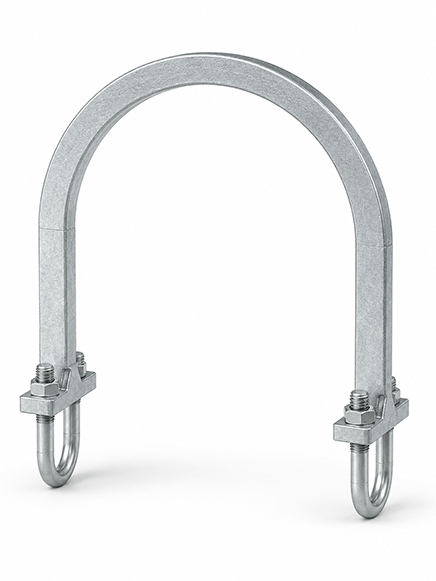
What Are the Main Differences Between the RL13 and RL18?
The RL13 and RL18 complete a similar basic task, yet they are not identical products. You should evaluate each model against your project drawings and the pipe schedule. You also need to check the required size, the intended installation method, and any applicable approval documents.
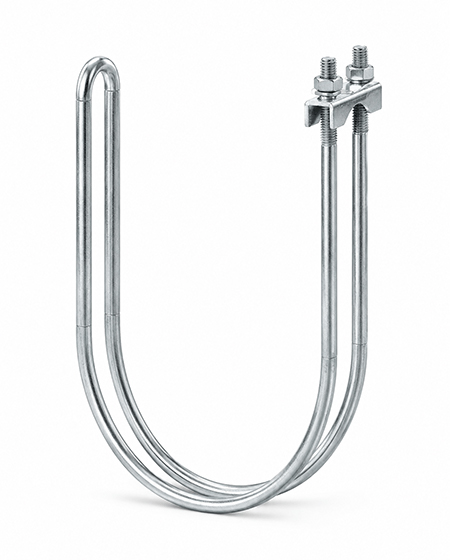
What Is the RL13 Lateral Bracing Clamp?
The RL13 is listed as a U Quick Lateral Bracing Clamp. It is built as the pipe attachment component of a sway brace assembly. You combine it with a proper bracing pipe and a structural attachment. Together, this setup helps control pipe movement caused by sway or seismic disturbance.
AquaBarrier uses carbon steel as the material for the RL13. This model is available for pipe sizes starting from 1 inch, or DN25, up to 8 inches, or DN200. The stated pipe compatibility includes Schedule 10, Schedule 40, GB/T 3091, and JIS G3454 sprinkler pipe. Furthermore, its surface features an electro-galvanized finish for reliable corrosion protection.
What Is the RL18 Lateral Bracing Clamp?
The RL18 is a U Lateral Bracing Clamp created from QT450 ductile iron. Just like the RL13, it acts as the pipe attachment within a complete sway brace assembly. Therefore, it is not meant to work as an independent seismic support.
The RL18 handles pipe sizes from 1-1/2 inches, or DN40, up to 8 inches, or DN200. It is also built for Schedule 10, Schedule 40, GB/T 3091, and JIS G3454 pipe. AquaBarrier delivers this product with a standard electro-galvanized finish.
How Do Carbon Steel and QT450 Ductile Iron Affect Selection?
Material stands out as one of the clearest differences between the two clamps. Even so, buyers should never assume that one material is automatically superior for every single project.
What Are the Characteristics of the RL13 Carbon Steel Design?
Carbon steel sees wide use in pipe supports, brackets, and seismic bracing components. It can deliver a highly practical balance of strength, manufacturability, overall weight, and cost.
The RL13 might appeal to projects that already utilize fabricated carbon steel support components. It is also good if you need a clamp range that starts at a 1-inch pipe. Additionally, its steel construction might fit procurement specifications that prefer formed or fabricated steel products.
Final suitability still relies on verified load data, the specific clamp geometry, and the fastener arrangement. You must also check the approved installation configuration. The material type alone does not determine the allowable seismic load.
What Are the Characteristics of the RL18 Ductile Iron Design?
QT450 is a specific ductile iron grade. It is formulated to offer higher toughness and better elongation than conventional gray cast iron. Its unique casting characteristics also allow manufacturers to form integrated shapes. These shapes feature reinforced sections and carefully controlled contact surfaces.
The RL18 might suit projects that prefer a solid cast body for medium and large sprinkler pipe. Ductile iron proves particularly useful when a component needs complex geometry. Such shapes would be far less efficient to build through cutting, bending, and welding.
The casting process must still be properly managed. Material composition, nodularity, and porosity all matter. Furthermore, dimensional accuracy and surface condition can deeply affect the final quality of a ductile iron clamp.
Which Clamp Covers the Required Pipe Size?
Pipe size serves as a direct selection criterion. The clamp must fit the supported pipe perfectly. Using a clamp that fails to match the specified pipe diameter can cause poor contact. It might also lead to unwanted movement or installation difficulties.
When Does the RL13 Offer a Size Advantage?
The RL13 handles nominal pipe sizes from 1 inch up to 8 inches. Its primary size-range advantage therefore exists at the smaller end.
For a project utilizing 1-inch or DN25 sprinkler pipe, the RL13 remains the applicable choice between these two models. This is because the published RL18 range only starts at 1-1/2 inches. Consequently, the RL13 becomes very useful for systems with smaller branch or distribution piping. This is always subject to the approved seismic design.
When Does the RL18 Become an Option?
The RL18 is available from 1-1/2 inches up to 8 inches. It overlaps with the RL13 across most medium and large pipe sizes.
For pipe measuring between 1-1/2 and 8 inches, the decision cannot rely on nominal size alone. The engineer or contractor must also evaluate material requirements and installation drawings. They should review the brace angle, available load data, component compatibility, and the project approval conditions.
Does the Pipe Standard Change the Decision?
Nominal pipe size does not always define the complete external geometry of a pipe. Wall thickness, the manufacturing standard, and the surface coating play a role. Dimensional tolerance can also change how the clamp contacts the pipe.
Which Pipe Specifications Do Both Models Support?
AquaBarrier lists both the RL13 and RL18 for the following:
- Schedule 10 pipe
- Schedule 40 pipe
- GB/T 3091 pipe
- JIS G3454 pipe
This broad compatibility makes both models highly relevant to international sprinkler and mechanical piping projects.
Why Should Installers Verify the Actual Pipe?
Installers need to confirm the nominal size and the actual outside diameter. They must also check the wall schedule, surface coating, and product standard before ordering. For example, a pipe marked DN50 should never be picked based solely on the numerical DN value. You must check the corresponding clamp size first.
The clamp must sit in its intended position without large gaps. It should avoid forced assembly or interference. Any field modification might alter the component’s performance. Therefore, modifications should not occur unless specifically permitted by the manufacturer or the project engineer.
Is One Design Faster to Install?
Installation time can heavily impact labor costs. This is especially true on massive commercial projects containing many seismic brace assemblies. Nevertheless, speed should never replace proper component selection and careful inspection.
Does the RL13 Quick Design Reduce Installation Work?
The RL13 is marketed as a U Quick Lateral Bracing Clamp. This indicates that installation efficiency forms a core part of its product positioning. It might be quite attractive where contractors must install multiple repeated assemblies. It is also ideal if they prefer a carbon steel clamp design.
The exact installation sequence, bolt arrangement, and tightening requirements matter greatly. The approved brace orientation should always be taken from the current AquaBarrier instructions. Installers must not copy torque values or procedures from a visually similar product produced by another supplier.
What Should Be Checked When Installing the RL18?
For the RL18, installers need to verify that the ductile iron body is properly positioned around the supported pipe. It must also be correctly connected to the designated bracing member.
The complete assembly needs to be checked for proper alignment and bolt engagement. You should also verify the brace angle, clearance, and contact with surrounding building services. AquaBarrier states that sway brace assemblies are meant to be installed according to NFPA 13 and the manufacturer’s specific installation instructions.
How Does the Electro-Galvanized Finish Affect Both Products?
Both models feature an electro-galvanized surface finish. This zinc coating helps shield the underlying carbon steel or ductile iron. It provides defense during transport, storage, active installation, and indoor service.
Is Electro-Galvanizing Suitable for Every Environment?
Electro-galvanized products see frequent use in dry indoor building environments. However, coating suitability must be checked much more carefully in humid rooms or coastal locations. Chemical processing areas and outdoor installations also require strict review.
The coating needs to be inspected for deep scratches, bare areas, or white corrosion products. You should also look for damage around contact points. Storage in wet packaging must be avoided. Trapped moisture can severely degrade zinc-coated surfaces.
Does the Same Finish Make RL13 and RL18 Equivalent?
No. A similar surface finish does not erase the distinct differences in base material, geometry, size range, and manufacturing method.
The coating represents only one part of total product performance. Buyers must evaluate the finished component as a complete unit. This includes the clamp body, bolts, dimensions, and material records. Load documentation and compatibility with the remaining sway brace components are also crucial.
When Should You Choose RL13 Instead of RL18?
The final decision needs to follow the engineered seismic support design. It should not rely on a general preference for steel or ductile iron.
Which Projects May Favor the RL13?
The RL13 might be the more fitting candidate when:
- The supported pipe is 1 inch or DN25.
- The project specification strongly favors carbon steel attachments.
- Installation efficiency stands as a major consideration.
- The approved system documentation clearly identifies the RL13.
- The contractor requires a single clamp family covering 1-inch through 8-inch pipe.
These points must be confirmed against project-specific load and installation requirements.
Which Projects May Favor the RL18?
The RL18 might be preferable when:
- The pipe size falls between 1-1/2 inches and 8 inches.
- A QT450 ductile iron clamp is strictly specified.
- A robust cast-body design is highly preferred.
- The RL18 perfectly matches the approved structural attachment and brace pipe.
- The buyer demands compatibility with the listed international pipe specifications.
For overlapping pipe sizes, procurement teams need to compare technical documentation. They should avoid choosing based solely on price.
Why Choose AquaBarrier as an RL18 Supplier?
Selecting a solid supplier involves much more than finding a matching catalog number. Buyers also require consistent materials, controlled production, clear technical communication, and dependable order support.
What Can AquaBarrier Provide?
AquaBarrier provides seismic sway bracing components, structural attachments, and quick bracing clamps. They also supply pipe clamps, beam adapters, hangers, and related products. Its product information highlights professional engineering, production support, and strict quality inspection. Pre-sales consultation and after-sales installation guidance are also key features.
For RL18 inquiries, customers can easily request product dimensions and pipe-size options. They can ask for material details, surface-finish information, samples, and formal quotations. Project-specific assistance is also available. This makes AquaBarrier a highly practical sourcing option for contractors, distributors, and buyers who seek U lateral bracing clamps for international projects.
Which Design Is Better for Your Project? — Conclusion
Neither the RL13 nor the RL18 is universally superior. The correct model is simply the one that perfectly matches the supported pipe and the approved system design. It must also align with the material specification, the installation method, and the required technical documentation.
Choose the RL13 when the project demands a carbon steel quick-clamp design or involves 1-inch pipe. Consider the RL18 when the specification requires a QT450 ductile iron body and the pipe size sits between 1-1/2 and 8 inches.
For pipe sizes covered by both models, you must compare the full assembly rather than looking at the clamp alone. The structural attachment, brace member, clamp, fasteners, brace angle, and building structure must all function together. They need to form a fully coordinated seismic restraint system.
FAQs
Can RL13 and RL18 Be Used Interchangeably?
Not automatically. While their size ranges overlap, the models utilize entirely different base materials and designs. Any substitution must be approved by the responsible engineer. It also must be supported by the relevant product and load documentation.
Which Model Should Be Used for 1-Inch Sprinkler Pipe?
Based on AquaBarrier’s published size ranges, the RL13 is offered for 1-inch pipe. Meanwhile, the RL18 begins at 1-1/2 inches. The complete assembly must always match the project design and the specific installation instructions.
Are RL13 and RL18 Complete Seismic Bracing Systems?
No. Each clamp acts only as the pipe attachment component of a sway brace assembly. It must be paired with a compatible bracing pipe, structural attachment, and proper fasteners. The supporting building structure is also required to build a complete system.


