

Floodwaters often breach buildings through everyday entryways. These include front doors, garage doors, warehouse entrances, and basement ramps. Water also enters via loading bays, utility rooms, and service corridors. Once water breaches these weak areas, destruction spreads rapidly. It ruins floors, electrical systems, and stored goods. Vehicles, machinery, documents, and interior finishes also suffer heavy damage. FEMA’s National Flood Insurance Program reports that flooding remains the most frequent and costly disaster. In fact, floods caused over $8 billion in destruction to homes and businesses across the United States in 2024. For property owners, facility managers, contractors, and homeowners, demountable flood barriers provide a practical flood protection method. They secure openings long before heavy rain, river flooding, storm surge, or surface water runoff hits the structure.
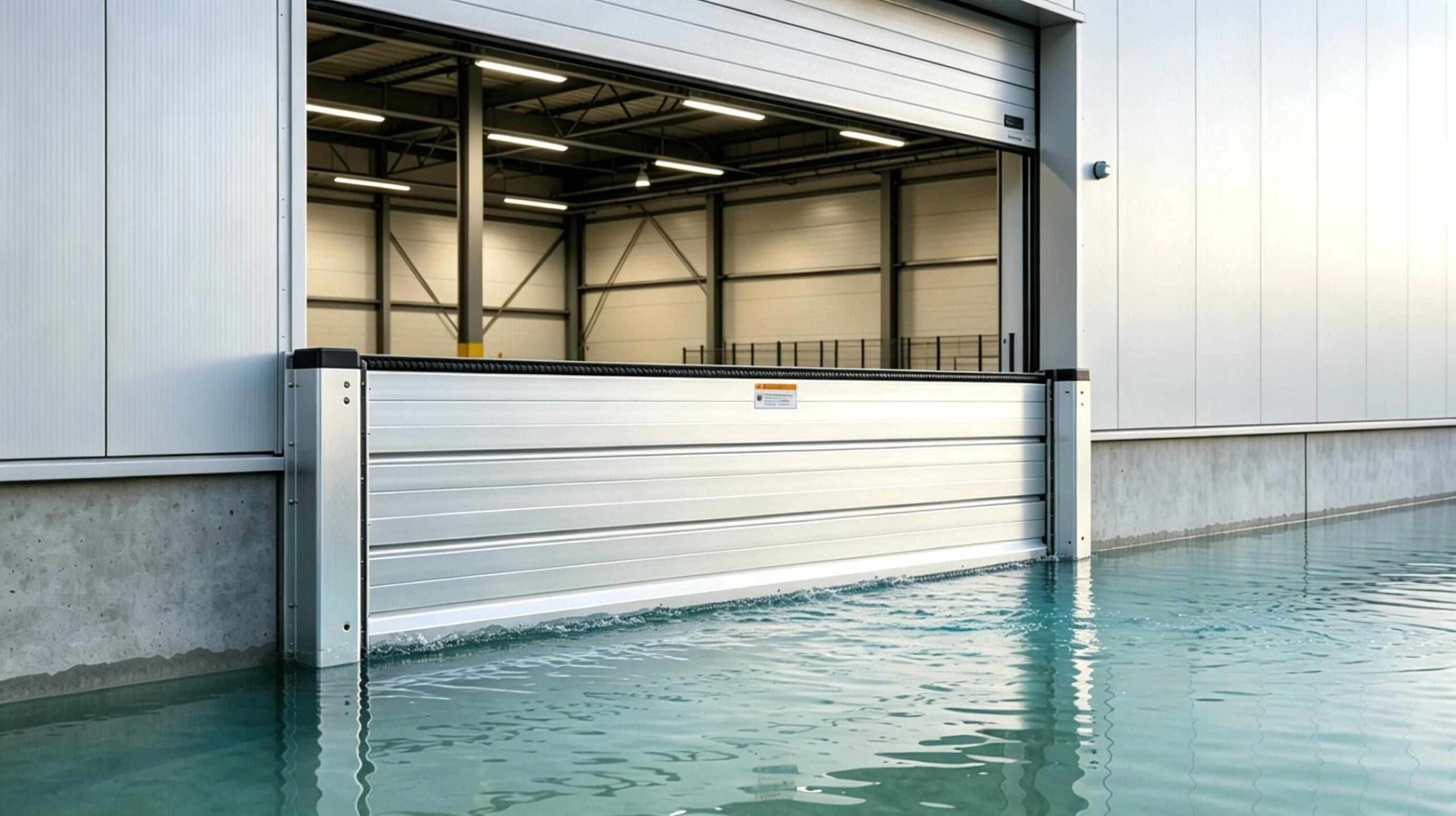
Why Do Doors, Garages and Warehouses Need Demountable Flood Barriers?
Every single building features unique flood entry points. A residential door might simply require compact defense. Meanwhile, a garage typically needs a much wider barrier. Furthermore, a warehouse or commercial facility demands a stronger system. This is necessary to handle large openings and frequent deployment.
What Makes Openings the Weakest Point During a Flood?
Doors, garage thresholds, loading bays, and warehouse shutters primarily exist for easy access, rather than water resistance. Even when the surrounding wall stands structurally strong, water finds a way in. It seeps through floor gaps, side edges, and door seals. Cable penetrations and low-level vents also allow water to enter.
A demountable flood barrier effectively forms a temporary, water-resistant shield across the entire opening. You install it when a flood threat arises. Then, you simply remove it after the danger passes. Consequently, this makes it an ideal choice for properties requiring flood protection without permanently obstructing daily routines.
AquaBarrier’s product page highlights several flood barrier solutions. These include the Flood Barrier-S670 and the flood barrier-F303. Additionally, the website actively positions its systems for residential, commercial, and industrial flood protection. This specific product category proves relevant for doors, garages, warehouses, gardens, and commercial openings.
What Is a Demountable Flood Barrier?
A demountable flood barrier serves as a removable flood protection system. It generally consists of side posts, barrier panels, locking components, and sealing elements. These parts work together to stop incoming water.
How Is It Different from Sandbags or Permanent Flood Walls?
Sandbags remain inexpensive and widely accessible. However, they demand significant storage space, intense labor, and difficult disposal. They also require rapid deployment under extreme pressure. Furthermore, they deliver inconsistent sealing because each bag relies entirely on placement quality. Conversely, permanent flood walls offer exceptional protection. Yet, they often prove quite costly and visually unappealing. They are also highly impractical for active access points.
Demountable systems provide a middle-ground option between these two extremes. They are entirely reusable and designed for specific openings. Moreover, you easily store them when the weather stays clear. AquaBarrier’s own commercial flood protection content thoroughly outlines these temporary or demountable flood protection solutions. It describes them as systems installed immediately when a flood threat emerges. Manufacturers often build them from lightweight, corrosion-resistant, high-strength aluminum alloys. Therefore, they remain highly suitable for demanding urban commercial environments.
| Flood Protection Method | Best Use | Main Limitation |
|---|---|---|
| Sandbags | Emergency, low-budget temporary defense | Labor-intensive, inconsistent seal, disposal issues |
| Permanent flood wall | Continuous flood-prone sites | High cost, permanent visual and access impact |
| Demountable flood barrier | Doors, garages, warehouses, commercial openings | Requires correct measurement, storage, and deployment training |
How Should Buyers Choose a Barrier for Doors?
Door flood barriers are typically much smaller than garage or warehouse systems. Nevertheless, they demand highly accurate measurement and exceptional sealing capabilities. This is primarily because door thresholds frequently feature remarkably uneven surfaces.
What Should Be Measured Before Ordering?
For a door flood barrier, buyers must carefully measure several critical elements. These include the clear opening width, side wall condition, and threshold shape. You must also check the floor level, expected flood height, and available fixing area. AquaBarrier’s installation guide strongly highlights numerous vital factors for residential flood barrier installation. These involve the wall condition for secure side-post attachment and the flood condition for proper base-plate embedding. Additionally, you must note the door opening direction and ensure the correct barrier height and width.
A sturdy wall or frame remains absolutely crucial. The side posts must powerfully resist immense water pressure. Furthermore, a flat threshold greatly helps the rubber seal compress evenly. If the floor slopes, displays cracks, or contains drainage gaps, the supplier might require detailed photos or drawings. They need these before recommending the optimal barrier design.
| Door Barrier Checkpoint | Why It Matters |
|---|---|
| Opening width | Determines panel length |
| Required flood height | Determines barrier height |
| Wall strength | Supports side posts |
| Threshold condition | Affects bottom seal |
| Door opening direction | Prevents conflict with daily use |
| Installation space | Confirms whether posts and panels can fit |
What Should Garage Owners Consider Before Buying?
Garages represent extremely common flood entry points. They frequently sit well below road level or connect directly to sloping driveways. Consequently, water can rush rapidly toward the door during intense downpours.
Why Are Garage Openings More Complex Than Front Doors?
Garage doors are significantly wider than standard doors. As a result, water pressure multiplies greatly with increased barrier width and height. Buyers must meticulously inspect the driveway slope and the exact floor level. They also need to evaluate the side wall strength. Finally, they must decide whether to install the barrier inside or outside the garage door.
A demountable garage flood barrier must allow incredibly swift installation. Flood events typically leave very little time for preparation. Additionally, it must be remarkably easy to store. Many homeowners and small businesses simply lack massive storage areas.
Many people use garages to store expensive vehicles, valuable equipment, or crucial inventory. Therefore, you must weigh the cost of protection against the significant potential loss of stored assets. Just a single inch of floodwater can inflict devastating damage on flooring, tools, and electrical outlets. It also ruins vehicle interiors. This reality makes reusable protection vastly more appealing than desperate, one-time emergency measures.
What Should Warehouses and Commercial Facilities Check?
Warehouses encounter a distinctly different risk profile. They generally feature large entrances, busy loading docks, wide roller shutters, service doors, and valuable stock stored at floor level.
How Can Facilities Protect Large Openings?
For expansive openings, buyers must assess the barrier span, panel strength, post anchoring, water pressure limits, and deployment manpower requirements.
Hydrostatic pressure increases with water depth: P = ρgh. This means taller barriers and wider openings require stronger panels, secure anchoring, and reliable side and bottom seals.
Facilities should also consider storage racks, panel labeling, inspection routines, and emergency response procedures.
Large commercial buildings might require several barriers simultaneously. They might need one for the main warehouse entrance and another for a loading bay. A side service door and a utility room might also need individual protection. In these complex scenarios, clear labeling proves essential. Labeling each panel and storing all components near the specific installation point greatly reduces chaotic deployment errors.
| Facility Opening | Typical Risk | Suggested Buyer Focus |
|---|---|---|
| Loading bay | Fast surface runoff, wide opening | Strong posts, clear deployment process |
| Warehouse shutter | Large span, stock exposure | Barrier height, panel rigidity |
| Utility room | Electrical and mechanical equipment | High priority protection |
| Basement ramp | Downhill water flow | Height, anchoring, drainage plan |
| Service corridor | Hidden entry route | Custom sizing and seal continuity |
Which Materials and Sealing Features Matter Most?
A reliable flood barrier must firmly withstand intense water pressure and severe corrosion. It must also endure repeated handling and resist rapid seal aging. Ultimately, materials directly dictate the system’s overall service life and ongoing maintenance costs.
Why Are Aluminum Alloy, Stainless Steel and Rubber Common Choices?
The AquaBarrier-S670 utilizes a precise blend of aluminium alloy, stainless steel, and rubber. This specific combination aims to deliver corrosion resistance, exceptional structural rigidity, and water-resistant sealing. These deliberate material choices resolve three fundamental demands. First, the panels must remain structurally strong yet easily manageable. Second, the hardware must completely resist rust. Finally, the sealing system must compress tightly against the opening.
Rubber seals play an absolutely vital role. The barrier’s metal structure alone cannot possibly stop water. Therefore, buyers should actively ask how the bottom seal and side seals function. They should also inquire whether replacement seals remain readily available. Furthermore, they need to know exactly how often they should inspect the seals.
How Should Buyers Evaluate Cost and ROI?
The absolute cheapest flood barrier rarely represents the lowest-cost option in the long run. A poorly fitted system will likely fail precisely when you need it most. Conversely, a well-designed demountable system reliably protects your property for many consecutive flood seasons.
What Costs Should Be Included Beyond the Purchase Price?
Buyers must accurately calculate the comprehensive cost of complete flood readiness. This includes the initial product price, precise measurement, and professional installation. It also covers shipping, secure storage, and staff training. Finally, you must factor in routine inspection, seal replacement, and critical emergency deployment time.
| Cost Factor | Why It Matters |
|---|---|
| Barrier price | Main upfront cost |
| Custom sizing | Prevents gaps and poor sealing |
| Installation labor | Affects total project budget |
| Storage solution | Keeps panels and posts ready |
| Staff training | Reduces emergency mistakes |
| Seal maintenance | Protects long-term water resistance |
| Potential avoided damage | Supports ROI calculation |
For B2B buyers, ROI connects directly to successfully avoided downtime. A flooded warehouse rapidly loses valuable inventory and severely delays pending orders. It damages expensive forklifts, completely disrupts logistics, and triggers massive insurance complications. For homeowners, ROI emerges primarily from preventing endless repairs to doors, floors, and garages. It also saves highly cherished personal property.
How Should a Demountable Flood Barrier Be Maintained?
A flood barrier functions strictly as an emergency product. It might sit totally unused for many months. Then, it must perform reliably at a moment’s notice. Consequently, strict maintenance forms a crucial part of reliable protection.
What Should Be Checked Before Each Flood Season?
Buyers must thoroughly inspect panels, side posts, anchors, and rubber seals. They should also check locking parts, storage cases, and all labels. Accumulated dirt, hidden corrosion, or missing bolts can cause disastrous delays. Deformed seals or misplaced components will drastically slow down emergency deployment.
A highly effective yet simple maintenance plan should include:
| Maintenance Task | Suggested Timing |
|---|---|
| Clean panels and seals | After each deployment |
| Inspect rubber for cracks | Before flood season |
| Check side posts and anchors | Twice per year |
| Test installation sequence | Before storm season |
| Replace damaged components | Immediately |
| Store panels dry and labeled | Always |
A brief practice installation proves incredibly valuable for busy facilities teams. It clearly confirms that all staff members know exactly where the components reside. It also ensures they understand how the panels fit together and roughly how long installation takes.
Why Choose AquaBarrier as a Reliable Flood Barrier Supplier?
A qualified supplier must provide significantly more than just metal panels. Buyers desperately need expert design support and clear material guidance. They also require solid installation advice, thorough documentation, and highly responsive after-sales service.
How Does AquaBarrier Support Flood Protection Projects?
AquaBarrier operates as the dedicated flood barrier brand of Weifang Ruilan New Material Technology Co., Ltd. The company explicitly states its strong focus on the intensive research, advanced development, and meticulous production of flood prevention barriers. Its detailed company profile describes a highly skilled team. This team covers advanced material research and development, robust structural engineering, and precise production technology. They also handle global sales and comprehensive after-sales support. Additionally, the official website clearly lists ISO14001, ISO45001, and ISO9001 certifications. It also displays FM Approved certification information directly on its dedicated certification page.
Buyers constantly compare door flood barriers, garage flood barriers, and warehouse flood protection systems. They also evaluate various commercial flood barrier solutions. Throughout this process, AquaBarrier stands out as a practical option. It excels when custom sizing, extreme material durability, and clear installation guidance remain top priorities. It also delivers highly responsive supplier support.
Conclusion
Demountable flood barriers serve as a highly practical solution. They effectively protect doors, garages, warehouses, and loading bays. They also secure utility rooms and various other vulnerable building openings. They deliver a completely reusable and highly site-specific alternative to messy sandbags. Furthermore, they completely avoid the massive access restrictions and ugly visual impact of permanent flood walls.
The absolute best buying decision always starts directly at the opening. You must accurately measure the width, height, and side wall strength. You must also evaluate the threshold condition, specific flood risk, and required deployment time. Finally, assess available storage space and establish a strict maintenance plan. For commercial properties and large warehouses, buyers must look even deeper. They should seriously consider potential business interruption, critical inventory protection, essential staff training, and long-term ROI.
A carefully selected demountable flood barrier represents much more than a simple product. It forms a crucial part of a comprehensive property protection plan. This plan seamlessly combines correct measurement, highly durable materials, and incredibly reliable sealing. It also relies heavily on fast deployment and strictly regular maintenance.
FAQs
Q1: Are demountable flood barriers suitable for both homes and commercial buildings?
Yes. You can effectively use demountable flood barriers for residential doors, busy garages, and retail shops. They also work perfectly for massive warehouses, active loading bays, critical utility rooms, and wide commercial entrances. The primary key involves choosing the absolutely correct size, proper height, and secure fixing method. You must also select the optimal sealing design for the specific opening.
Q2: What information should I provide before requesting a flood barrier quote?
You must provide the exact opening width and the specific desired protection height. Also, include clear photos of both sides of the opening. Detail the wall material, exact threshold condition, and any floor slope. Finally, state the expected flood depth and specify whether the barrier protects a door, garage, warehouse, or loading bay.
Q3: How often should a removable flood barrier be inspected?
You must rigorously inspect the barrier right before every single flood season. You should also check it thoroughly after every actual deployment. Carefully check all panels, side posts, heavy anchors, and mounting bolts. Examine the rubber seals and verify the overall storage condition. You must immediately replace any damaged seal or missing component long before the next flood event strikes.


